Skip to content
Open to networking

Alex McCune

IT Systems Administrator

Enterprise IT Infrastructure · Automation · Identity & Access Management · Security

I administer critical applications and identity systems across 9 hospitals and 100+ outpatient facilities, with a track record of zero unscheduled downtime during major patching, migrations, and upgrades.

Experience

Application Administrator

Sep 2024 — Present

University of Rochester Medical Center

Oversee enterprise application administration, system patching, identity lifecycle management, and infrastructure automation for 9 hospitals and 100+ outpatient facilities.

  • Orchestrated security patching, system upgrades, and server migrations for clinical applications across 9 hospitals and 100+ outpatient locations on Linux and Windows Server, achieving zero unscheduled downtime and zero clinical impact
  • Instituted ITIL Change Management framework encompassing risk assessment, security impact analysis, and documented rollback procedures for all production changes, reducing deployment incidents and ensuring audit-ready change records
  • Directed full-scope Identity and Access Management (IAM) lifecycle—user provisioning, Role-Based Access Control (RBAC), and Privileged Access Management (PAM)—for clinical applications supporting thousands of healthcare end users
  • Engineered PostgreSQL queries and Power Platform dashboards to analyze system performance metrics, surfacing optimization opportunities that improved application reliability and end-user experience
  • Drove cross-functional system integrations with IT engineering teams, clinical stakeholders, and third-party vendors to resolve complex technical issues and deploy new features across the healthcare network
  • Enforced HIPAA Security Rule compliance through security audits, vulnerability assessments, and remediation; strengthened data protection and access control standards across all managed applications

Help Desk Analyst

Jul 2023 — Sep 2024

University of Rochester Medical Center

Provided enterprise IT support for 26,000+ users, specializing in incident triage, access management, and knowledge base development.

  • Onboarded and trained incoming help desk agents on ITIL incident management, ServiceNow ticketing, HIPAA privacy requirements, and troubleshooting workflows, accelerating agent readiness and service quality
  • Resolved escalated Tier 2 incidents including network outages, Active Directory authentication failures, system-wide application errors, and undocumented software defects, maintaining sub-15-minute average resolution time
  • Authored 30+ ServiceNow knowledge base articles on system architectures, troubleshooting procedures, and escalation protocols; reduced repeat incident volume and improved first-call resolution rates

Computer Science Lab Manager

Jan 2021 — May 2022

Concordia University Irvine

Managed university computer science lab infrastructure serving 200+ students, with emphasis on system reliability and automated administration.

  • Architected and maintained Windows Server and Ubuntu LDAP infrastructure across 50+ lab workstations serving 200+ users; managed security patching, Group Policy Objects (GPOs), access controls, and endpoint protection
More accomplishments
  • Developed PowerShell, Python, and Bash automation scripts for secure account provisioning, software deployment, device configuration, and security monitoring, eliminating manual administrative overhead

Software Engineer Intern

Dec 2020 — May 2021

Collectors

Developed computer vision software for trading card identification and maintained CI/CD pipelines.

  • Engineered a Python/OpenCV computer vision application to detect and classify damage on 3,000+ collectible trading cards, automating quality assessment and replacing error-prone manual inspection processes
More accomplishments
  • Managed source control and CI/CD pipelines through Azure DevOps; designed a PostgreSQL relational database of trading card metadata to support automated identification and classification at scale

IT Lead Technician

Jan 2018 — May 2022

Concordia University Irvine IT Department

Led help desk operations and mentored team members on complex technical issues.

  • Led and mentored a team of technicians supporting 4,000+ students and faculty; triaged escalated help desk tickets, enforced service quality standards, and reduced average resolution time through coaching and process improvement
More accomplishments
  • Performed classroom hardware repairs, network connectivity troubleshooting and resolution, and audio-visual support for university events and fundraisers, ensuring reliable technology operations across campus

Education

Bachelor of Science, Computer Science

Concordia University Irvine

Aug 2017 — May 2022

  • Computer Science Student of the Year — Graduating Class of 2022
  • Coursework in systems programming, network administration, database management, and software engineering

Skills & Technologies

Systems & Infrastructure

Windows Server 2016–2022Linux (Ubuntu)Active Directory / Group PolicyLDAPVMwareOffice 365Endpoint ManagementServiceNow (ITSM & Ticketing)

Cloud & DevOps

AWS (EC2, S3, Lambda)Azure DevOpsDockerGitCI/CD Pipelines

Scripting, Automation & Databases

PowerShellPythonBashGoSQLPostgreSQLREST API Integration

Security & Compliance

HIPAA Security RuleVulnerability & Patch ManagementIAM / RBAC / PAMSecurity AuditingIncident ResponseNIST CSFITIL Change ManagementDisaster Recovery PlanningMFA

Core Competencies

IT Environment ManagementTechnology Procurement & Vendor ManagementPersonnel Lifecycle (Onboarding / Offboarding)SOP DevelopmentStakeholder Communication & End-User Training

Certifications

Security certification and current compliance training.

Earned

CompTIA Security+

CompTIA

Earned

HIPAA Privacy & Security Training

URMC (Annual)

Projects

Selected work — built to solve real problems, not just to demo a stack.

Aegis screenshot

Aegis

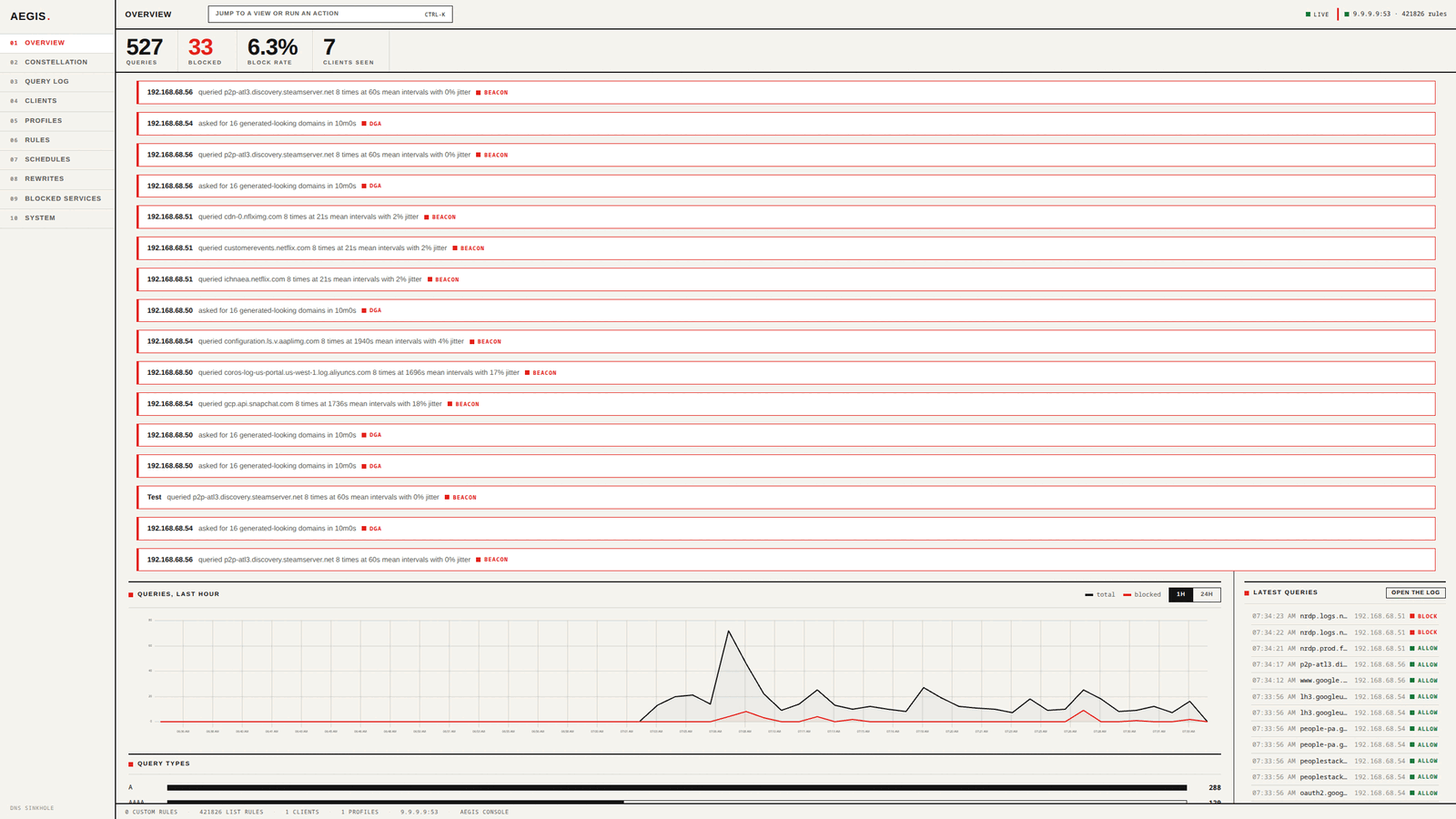
Network-wide DNS sinkhole that doubles as a productivity tool. Blocks ads, trackers, and whole services like social media at the resolver, with per-client policy, schedules, and a node graph of live network traffic.

Outcome: Runs the whole network's DNS from a single binary: about 6% of live queries blocked as ads, trackers, and telemetry, while everything else still resolves normally.

GoSolidSQLiteDockerWebGL
Project details

Problem

Browser extensions only protect browsers. Phones, TVs, and everything else on the network still pulled ads and trackers, and I wanted a single enforcement point for focus and privacy instead of a per-device install.

Constraints

It runs 24/7 as the network's resolver, so it cannot be the slowest hop, and blocklists with 400k+ rules keep churning underneath it. Everything stays configurable from the web console instead of a config file, and it has to survive restarts without losing state.

What I decided

Shipped it as one static Go binary: DNS server, HTTP API, and the Solid web console embedded in the same artifact, with SQLite for config and query history, blocklists held in memory behind per-client and per-profile policy, and multi-arch Docker images from CI. The console draws every client, profile, and upstream as a node graph so you can watch traffic flow across the network, while a live query stream makes each block traceable and beaconing plus DGA detection flag traffic that looks wrong.
Matrix Miles screenshot

Matrix Miles

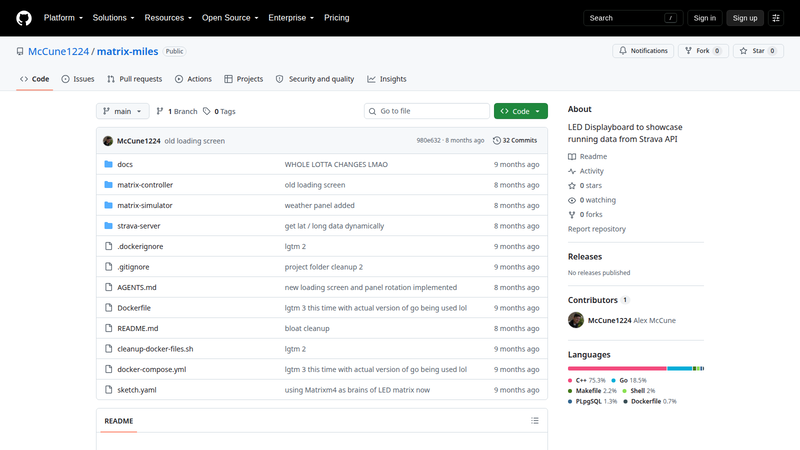
IoT dashboard that pulls Strava data to a physical LED matrix. Go backend, PostgreSQL, and CircuitPython on a Pi.

Outcome: Auto-syncs 30+ days of runs to a headless Pi display with zero manual lookups each morning.

GoCircuitPythonPostgreSQLDockerStrava API
Project details

Problem

I wanted my daily running stats visible on a physical display by the door — not buried three taps deep in the Strava app — and a real reason to learn embedded development end to end.

Constraints

No prior embedded or CircuitPython experience, a tight hardware budget (off-the-shelf parts only), and Strava's API rate limits plus webhook requirements that needed a public endpoint I didn't want to expose.

What I decided

Built Go as the integration layer — poll Strava, cache in PostgreSQL, serve a small REST API — and kept the display deliberately dumb: CircuitPython just fetches and renders. Chose polling over webhooks to avoid standing up an internet-facing server.

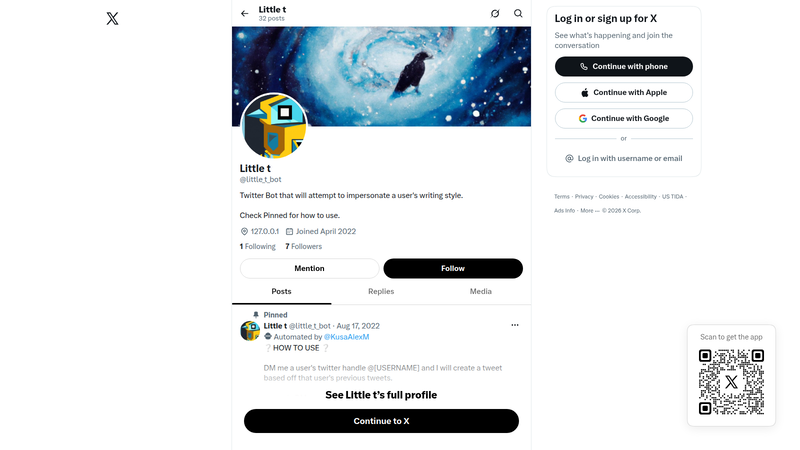
Little_T Twitter Bot screenshot

Little_T Twitter Bot

Twitter bot that generates text with Markov Chains. Ran on AWS Lambda with MongoDB for state, responding to mentions in real time.

Outcome: Ran autonomously, responding to mentions for months at near-zero hosting cost.

PythonAWS LambdaMongoDBTwitter API
Project details

Problem

I wanted to experiment with generative text and serverless deployment without paying for always-on infrastructure.

Constraints

The Twitter API required a paid tier and a public webhook endpoint, Lambda cold starts added latency, and the MongoDB Atlas free tier capped throughput — all while the Markov model needed enough corpus to stay coherent.

What I decided

Used Markov chains over a curated corpus for on-topic output and deployed serverless on Lambda behind API Gateway to stay near-zero cost, with MongoDB for conversation state.

Betrayal Discord Bot screenshot

Betrayal Discord Bot

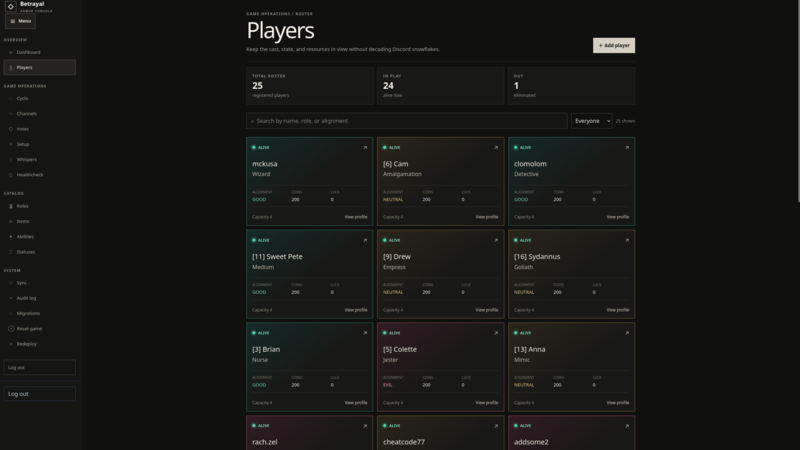
Discord bot for a social deduction game. Handles concurrent lobbies with full state isolation and a traceable command log.

Outcome: Handled multiple concurrent games with clean state isolation and a complete audit log for every command.

GoPostgreSQLDockerDiscord API
Project details

Problem

A friend's gaming group needed a bot that could run a custom social-deduction mode reliably across many concurrent lobbies without mixing games together.

Constraints

Discord's rate limits, disputes that needed a traceable record, and per-game voice/text channels that had to spin up and tear down cleanly without leaking state between matches.

What I decided

Went async with batched PostgreSQL writes and structured logging for full auditability, isolated each game's channel lifecycle, and kept a command audit trail so any action is traceable after the fact.

Kusa Data screenshot

Kusa Data

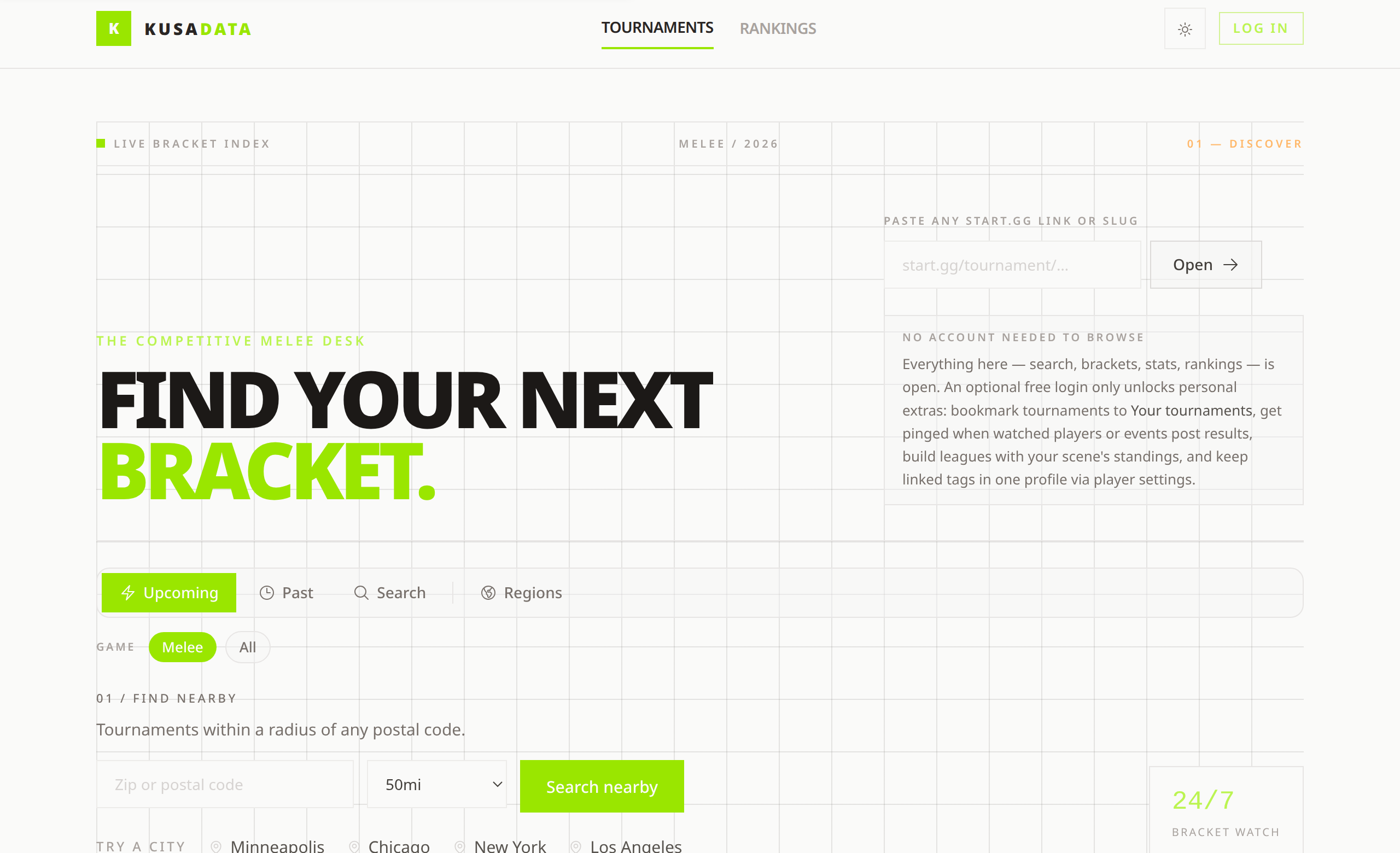
Melee tournament dashboard that pulls data from Start.gg. Browse events, check seeds and results, and view per-player match analytics.

Outcome: Tournament pages load from cache in well under a second, with full seed and match analytics for any player.

ElixirPhoenix LiveViewTailwind CSSRedisStart.gg API
Project details

Problem

I wanted a faster way to scout opponents and read tournament results than Start.gg's own UI, and a project to learn Elixir and Phoenix LiveView.

Constraints

Start.gg's GraphQL API is rate-limited, result data is deeply nested and verbose, and I wanted near-real-time updates without hammering the upstream on every page view.

What I decided

Used Phoenix LiveView for a reactive UI with no separate JS frontend, and Redis to cache GraphQL responses and debounce upstream calls while normalizing seeds and results for per-player analytics.

More on GitHub

CompTIA Security+ Prep

Study tool for the CompTIA Security+ (SY0-701). Structured course plan, practice questions, timed exams, and spaced repetition — all offline with SQLite.

SvelteKitSQLiteTailwind CSSObsidian

Eggbert

RPG in Godot where you play as Eggbert, an egg accused of a crime he didn't commit. Escape a prison system and piece together what happened.

GodotC#GDScript

Contact

Get in touch about IT systems administration, infrastructure, and cybersecurity opportunities.

Laurel, MD